Below is a summary of common malfunctions in laboratory rotary evaporators and their corresponding solutions:
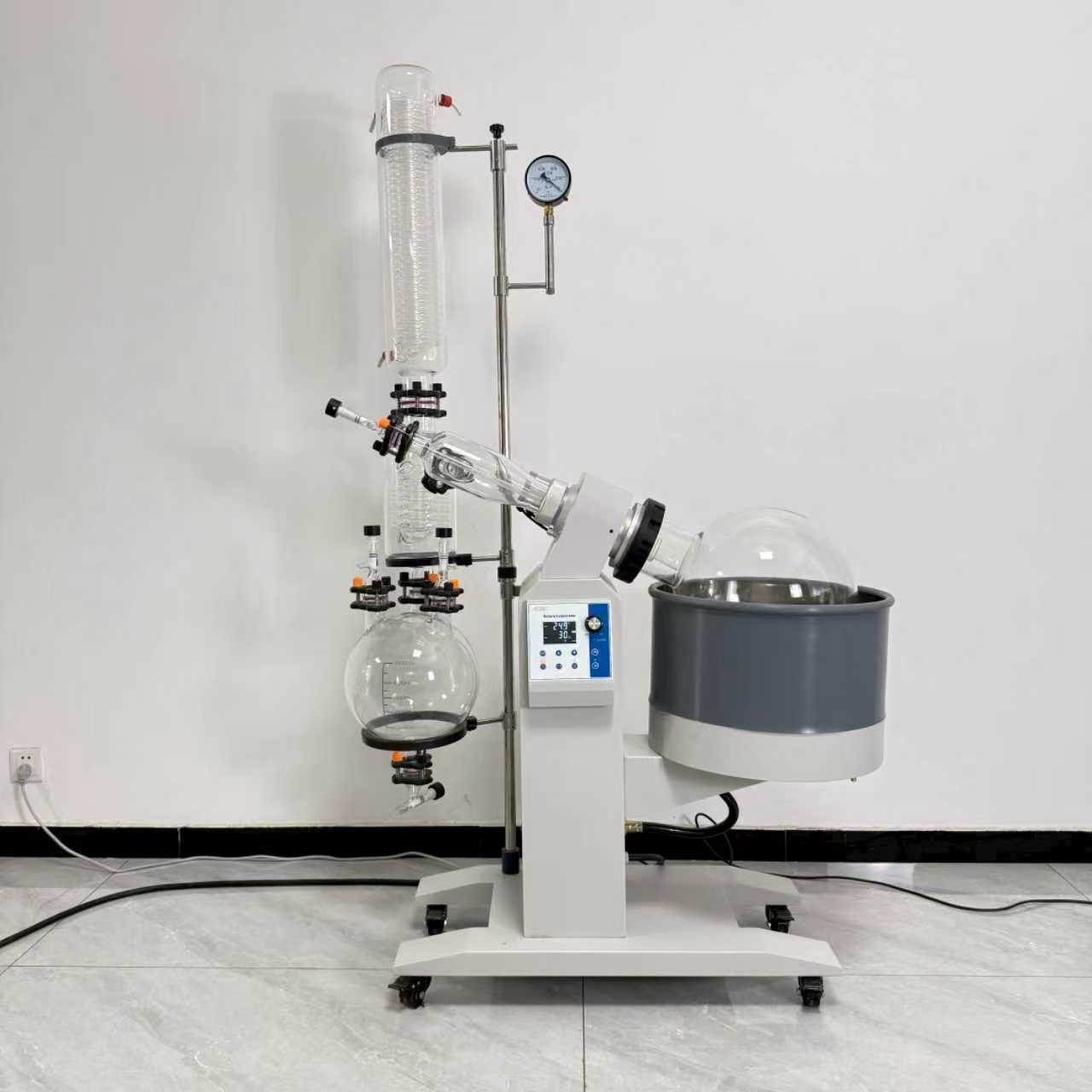
I. Motor Not Rotating
Check the following:
1. If the control box indicator light (or digital display) is on, inspect whether the internal/external plug connections are loose or broken.
2. If the control box indicator light (or digital display) is off.
3. Confirm that items 1 and 2 show no abnormalities.
4. Inverter displays “O.U.” due to high-frequency interference.
5. Inverter protection function activated.
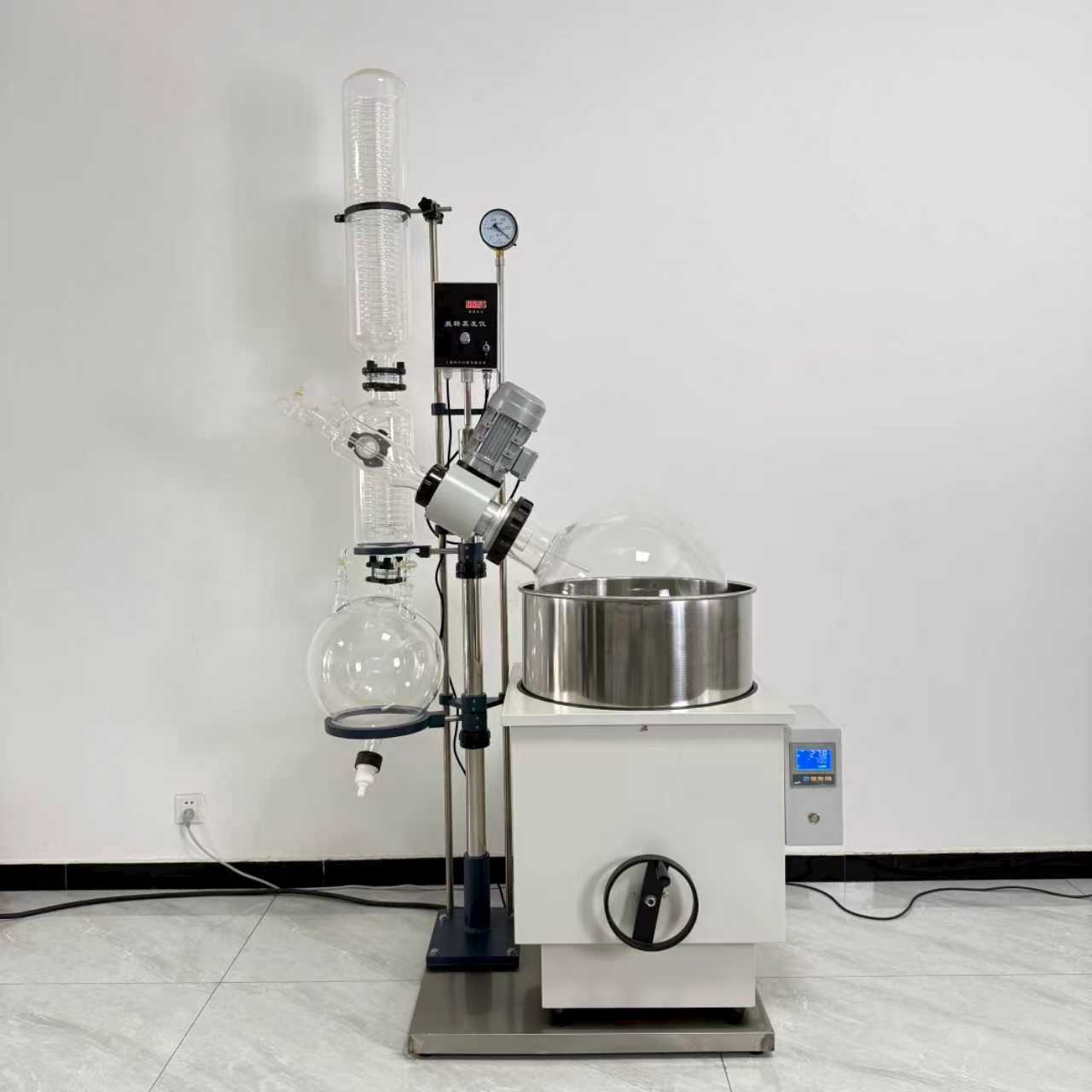
Solutions:
1. Reinsert plugs and reconnect broken wires.
2. Replace fuse or verify power supply integrity.
3. Replace circuit board or control box.
4. Securely connect ground wire or relocate work area.
5. Troubleshoot per page 33 of the VFD manual.
II. Bath Pot Heating Failure Diagnosis:
1. Bath pot displays “Full”.
2. Green “OUT” or “ON” indicator on thermostat illuminates but heating fails.
3. Green “OUT” or “ON” indicator on thermostat remains off when bath temperature falls below setpoint.
4. Temperature controller displays “OVER” or “000”.
Solutions:
1. Check 220V power supply.
2. Replace heating coil. Replace solid-state relay or relay board.
3. Replace temperature controller.
4. Inspect probe wiring or replace probe.
III. Bath Pot Overheating Detection:
1. When bath temperature exceeds setpoint, the green “OUT” or “ON” indicator on the temperature controller remains lit. (1-2°C deviation is normal)
2. The green “OUT” or “ON” indicator on the temperature controller has turned off, yet heating persists.
3. Digital display shows bath temperature significantly lower than actual bath temperature.
Solutions:
1. Replace the temperature controller.
2. Replace the solid-state relay or relay board.
3. Replace the probe or temperature controller.
IV. Motor Heating Inspection Items:
1. Motor temperature rise (housing temperature - ambient temperature): △T ≤ 40°C is normal.
2. △T > 40°C: Address per the method on the right.
3. If the display section flashes, indicating motor current overload, address per method 2 on the right.
Solutions:
1. No action required; continued operation is permissible.
2. ① Reduce agitator blade size to decrease load.
② Avoid rotational resonance points.
③ Appropriately increase speed to utilize medium-range operation.
④ Eliminate abnormal mechanical resistance.
⑤ Perform maintenance on sealing and lubrication components.
