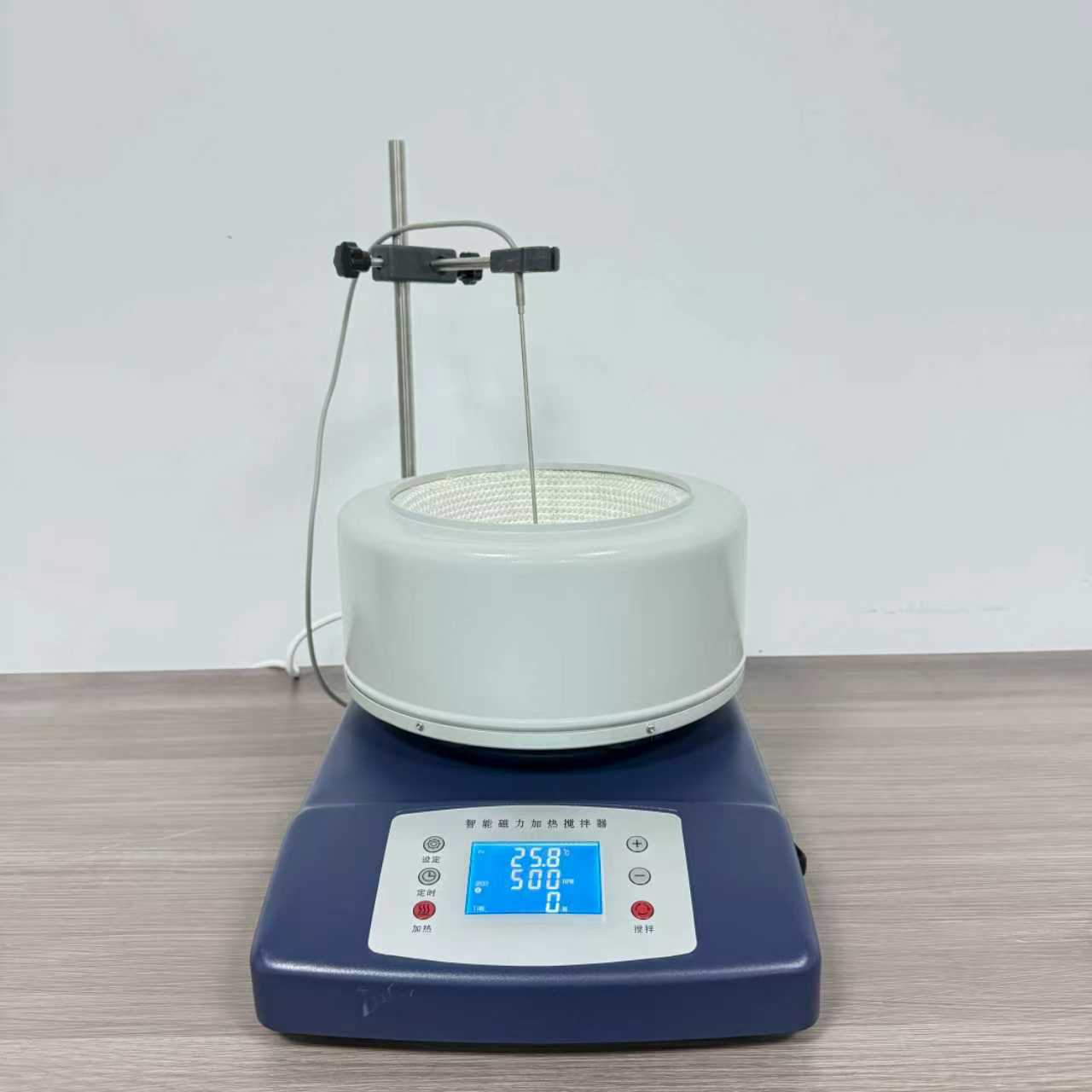
Magnetic stirrers are laboratory instruments used for liquid mixing, primarily designed to stir or simultaneously heat and stir low-viscosity liquids or solid-liquid mixtures. Their fundamental principle leverages the magnetic field's property of like poles repelling and opposite poles attracting. This magnetic field drives a magnetic stir bar placed within the container to rotate in a circular motion, thereby achieving liquid agitation. When integrated with a heating and temperature control system, it can heat and regulate sample temperature according to specific experimental requirements, maintaining the necessary thermal conditions for experiments and ensuring thorough liquid mixing.
Magnetic stirrers involve eight key operational factors in experiments, which are detailed below:
1. Clean Before Servicing: For heavily contaminated electrical equipment, first clean the buttons, wiring points, and contact points. Check if any external control keys are malfunctioning. Many malfunctions stem from dirt and conductive dust buildup.
2. Static before dynamic: Before energizing the equipment, assess the condition of electrical buttons, transformers, thermal relays, and fuses to pinpoint potential faults. During energized testing, listen for abnormal sounds, measure parameters, diagnose issues, and proceed with repairs. For example, when a motor experiences a phase loss, if measuring the three-phase voltage values is inconclusive, listen for abnormal sounds and measure the voltage of each phase to ground individually to identify the missing phase.
3. Power source before equipment: Power supply failures account for a high proportion of all equipment malfunctions. Therefore, inspecting the power source first often yields twice the result with half the effort.
4. General before specific: Issues stemming from component quality or other equipment problems typically account for about 50% of common faults. Specialized electrical problems are often soft issues requiring experience and instrumentation for measurement and repair.
5. Ask before touching: When troubleshooting magnetic stirrers, avoid rushing to disassemble. First inquire about the sequence of events leading to the problem and its symptoms. For unfamiliar equipment, first familiarize yourself with circuit principles and structural characteristics while adhering to relevant regulations. Before disassembly, thoroughly understand each electrical component's function, location, connection method, and relationship with surrounding parts. Without assembly diagrams, sketch diagrams during disassembly and label components.
6. Mechanical before electrical: Only proceed with electrical inspections after confirming mechanical components are intact. When troubleshooting circuit faults, use diagnostic tools to locate the problem area. After ruling out poor connections, systematically examine the relationship between circuitry and mechanical operation to avoid misdiagnosis.
7. External before internal: First inspect the equipment for visible cracks or damage, understand its maintenance history and service life, then proceed to internal components. Before disassembly, eliminate external factors causing issues. Only disassemble after confirming the problem originates internally; otherwise, direct disassembly may worsen the equipment's condition.
8. Troubleshoot before debugging: For electrical equipment exhibiting both malfunctions and debugging requirements, resolve the underlying issues before proceeding with debugging.
