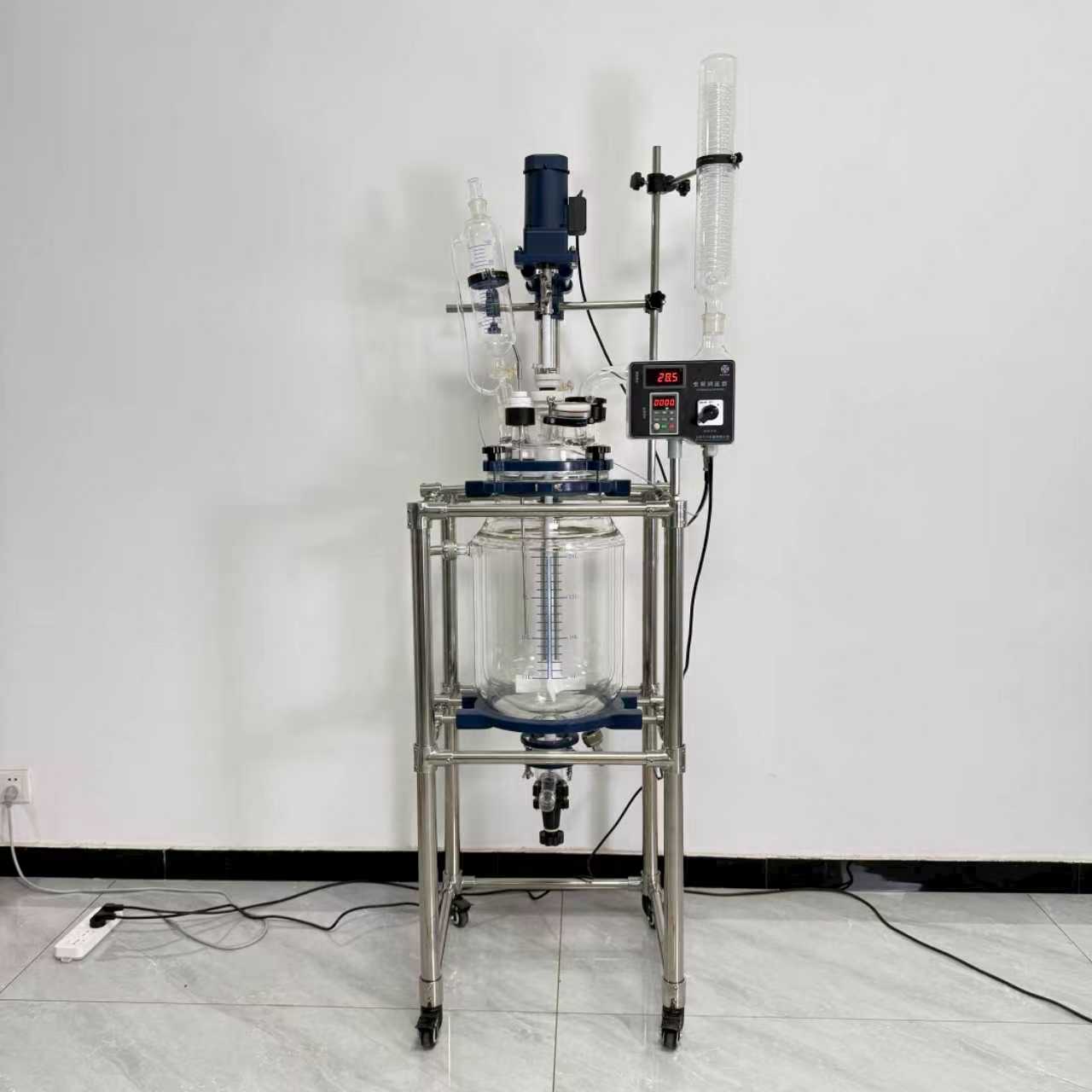
As a widely used piece of equipment in laboratories and industrial production, the double-walled glass reactor has become an indispensable experimental and production tool across multiple fields such as chemistry, pharmaceuticals, petroleum, and food processing, thanks to its unique design and versatility. This article will delve into several significant advantages of the double-walled glass reactor.
Comprising inner and outer glass layers with an intermediate compartment for heat/cold sources, this design enhances both safety and thermal insulation. The vacuum layer between the glass layers effectively blocks heat transfer and minimizes heat loss, enabling the reactor to maintain a constant temperature for extended periods under set conditions. This is particularly crucial for reactions requiring precise temperature control, ensuring stability and reproducibility.
The use of high borosilicate glass endows the double-walled glass reactor with outstanding corrosion resistance. This material possesses an extremely low thermal expansion coefficient and exceptional chemical stability, enabling it to withstand exposure to various chemical reagents, including strong acids, strong alkalis, and organic solvents. This allows the reactor to perform reliably in diverse chemical reactions while extending its operational lifespan.
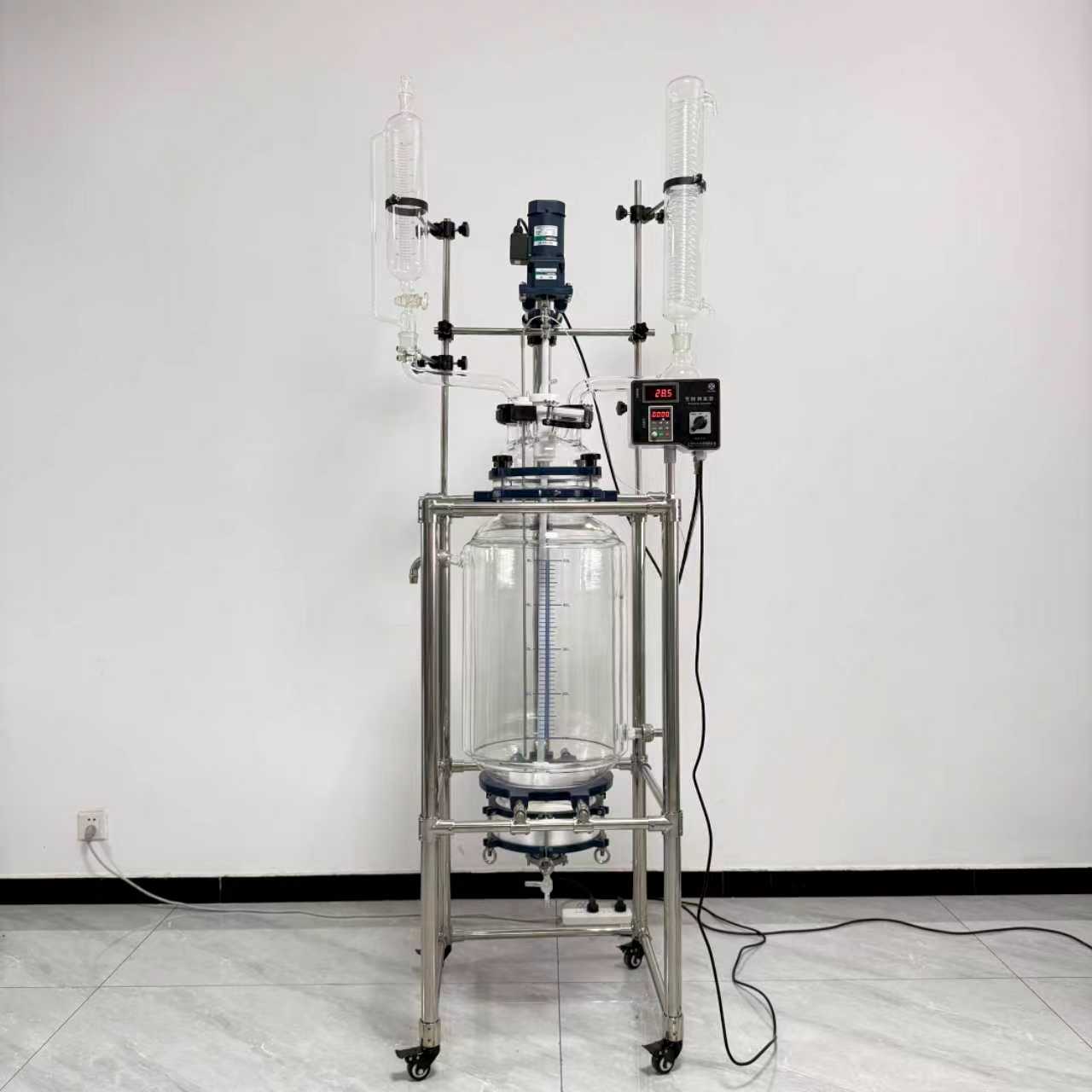
The design of the double-layer glass reactor also prioritizes operational convenience and visual clarity. The transparency of the outer glass allows experimenters to directly observe the color, concentration, and flow of the reaction mixture, enabling real-time monitoring of reaction progress. Simultaneously, the electric heating system ensures rapid heating, precise temperature control, and straightforward operation. Experimenters can adjust the reactor's speed and temperature as needed to accommodate different reaction requirements.
The double-walled glass reactor also boasts excellent sealing performance and versatility. Manufactured using die-casting technology, it ensures superior sealing integrity, preventing gas or liquid leakage during reactions. This guarantees reaction accuracy and safety while avoiding environmental hazards or exposure to harmful substances. Additionally, the double-walled glass reactor can be configured with various accessories and equipment to accommodate diverse chemical reactions, substance synthesis, separation, purification, and other experimental or production processes.
In terms of environmental protection and energy conservation, the double-walled glass reactor excels. The vacuum layer between its inner and outer walls provides effective thermal insulation, minimizing energy loss and enhancing energy efficiency. Simultaneously, it reduces chemical waste and pollutant emissions, aligning with modern industrial environmental standards.
In summary, double-walled glass reactors play a vital role in both laboratory and industrial settings due to their high safety, excellent thermal insulation, strong corrosion resistance, ease of operation, superior sealing, versatility, and eco-friendly energy efficiency. With ongoing technological advancements and industrial development, the performance of double-walled glass reactors will continue to improve, expanding their application scope and contributing significantly to progress in chemistry, pharmaceuticals, petroleum, food processing, and other fields.
