Stainless steel laboratory reactors are commonly used equipment in laboratories, primarily employed for chemical reactions, material synthesis, and solution mixing processes. As a critical component of the reactor, the installation method of the agitator is vital to the operational efficiency and safety of the equipment. This article will detail several primary installation methods for stainless steel laboratory reactor agitators and their associated precautions.
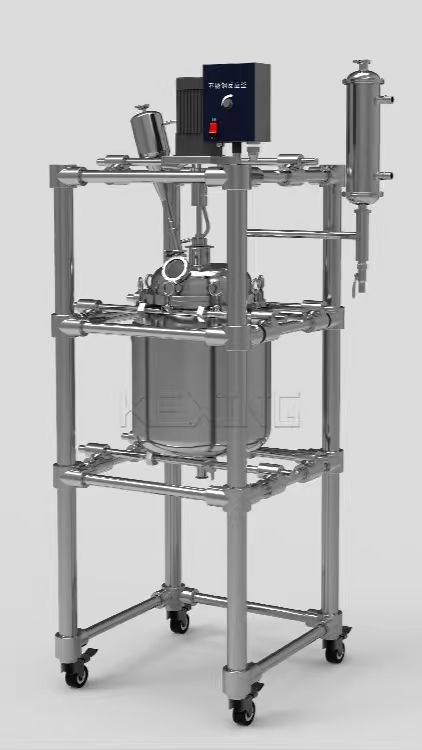
I. Installation Methods for Paddle Agitators
Paddle agitators represent the most common stirring configuration in stainless steel laboratory reactors. They primarily consist of stirring blades, locating keys, clamping sleeves, shaft rings, main shafts, and bottom supports. Installation methods for paddle agitators include the following:
1. Straight Installation: The stirring blades are mounted straight onto the main shaft, suitable for general mixing and stirring operations.
2. Folded Blade Installation: The stirring blades are installed in a folded configuration, typically used in applications requiring higher stirring efficiency, such as mixing high-viscosity materials.
3. Multi-Layer Installation: When the reaction material volume is large or more intense stirring is required, multiple layers of blades can be installed on the stirring shaft. Adjacent layers of blades should be installed at 90° to each other to enhance stirring efficiency. The installation position of multi-layer blades should be determined based on material properties and agitation requirements, generally positioned at the weld bead of the lower head, mid-liquid level, or slightly below.
II. Connection Methods Between Agitator and Main Shaft
The connection method between the agitator and main shaft directly impacts the agitator's stability and durability. Common connection methods include the following:
1. Bolt Clamping: Suitable for agitators with smaller shaft diameters. The agitator is secured to the main shaft via bolts and fastened with set screws.
2. Through-Bolt or Cylindrical Pin: Suitable for agitators with larger shaft diameters. The agitator is firmly connected to the main shaft using through-bolts or cylindrical pins.
III. Installation Precautions
1. Vertical concentricity: During installation, ensure the agitator is vertically aligned and concentric with the main shaft to guarantee mixing efficiency and equipment stability.
2. Sealing integrity: Maintain a tight seal between the agitator and reactor lid to prevent material leakage. Use gaskets or tapered surfaces contacting curved surfaces during installation, achieving a secure seal by tightening the main nut.
3. Electrical Connection: The agitator motor must be correctly connected to the electrical cabinet to ensure proper operation of the electrical control system. When installing the electrical cabinet, secure it to the top of the support column, tighten the screws, and plug in the connector.
4. Safety Inspection: After installation, conduct a comprehensive leak test to ensure no leakage occurs throughout the system. Simultaneously, verify the agitator is securely fastened and that all connecting pipes, seals, and other components are intact.
IV. Installation of Other Auxiliary Equipment
In addition to the agitator, stainless steel experimental reactors require auxiliary equipment such as pressure gauges, temperature sensors, metering devices, pressure relief valves, and safety valves. Installation of these components must also comply with relevant standards to ensure proper operation and safety.
V. Summary
The installation methods for stainless steel experimental reactor agitators vary widely, with selection depending on material properties and agitation requirements. During installation, critical aspects such as vertical concentricity, sealing integrity, electrical connections, and safety inspections must be meticulously addressed to guarantee equipment stability and durability. Through proper installation and commissioning, the agitation efficiency of stainless steel experimental reactors can be fully realized, enhancing both experimental productivity and safety.
This article references AI-generated content.
